The curious are rewarded
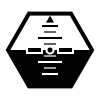
The mark on this site is an attitude indicator. Here is what it is doing and why it looks the way it does.
It shows an attitude
An attitude indicator is the instrument in the middle of every panel. It draws the horizon as the aircraft sees it: sky above, ground below, and a fixed symbol for the aircraft itself. When the nose comes up, the horizon drops. When the wings bank, the horizon tilts. The mark is frozen at fifteen degrees nose-up with the wings level, which is what the instrument shows in the first seconds after the wheels leave the runway.
It is a hexagon because of a chart
Aircraft instruments are round. Hexagons come from somewhere else: on aeronautical charts, a VOR, the ground beacon that aircraft navigate by, is drawn as a hexagon with a dot in the middle. Pilots fly from one to the next. It seemed like the right shape for a site whose status line ends "where good problems take me."
Two bars and a dot
On many attitude indicators the aircraft is drawn as two short bars and a dot. The same three shapes are the oldest experiment in human-computer interaction: two targets and a pointer moving between them. Paul Fitts ran it in 1954 and the result, that the time to reach a target depends on its distance and its width, still decides how big the buttons on your phone are. Half of what I do is flying. The other half is that experiment, in one form or another.
The favicon turns left
In the browser tab the instrument is banked twenty degrees to the left with the symbol removed, because at sixteen pixels the bars and the dot stop being an aircraft and start being a face. The left turn is not arbitrary either: circuits at most airports are flown with left turns, so after takeoff, left is the way you go.