
2019–2025 · PhD, University of Waterloo · Research
Interaction systems for constrained spaces
A thesis on what happens to technology designed for big, stable rooms when people use it in small, moving, improvised ones.
Outcome
Papers at CHI and Graphics Interface; the Proteus deck; 14 course sections taught along the way.
Path
-
2019 · Question
After Amazon: why do products designed so carefully land so differently in people's actual lives?
-
2021 · Field
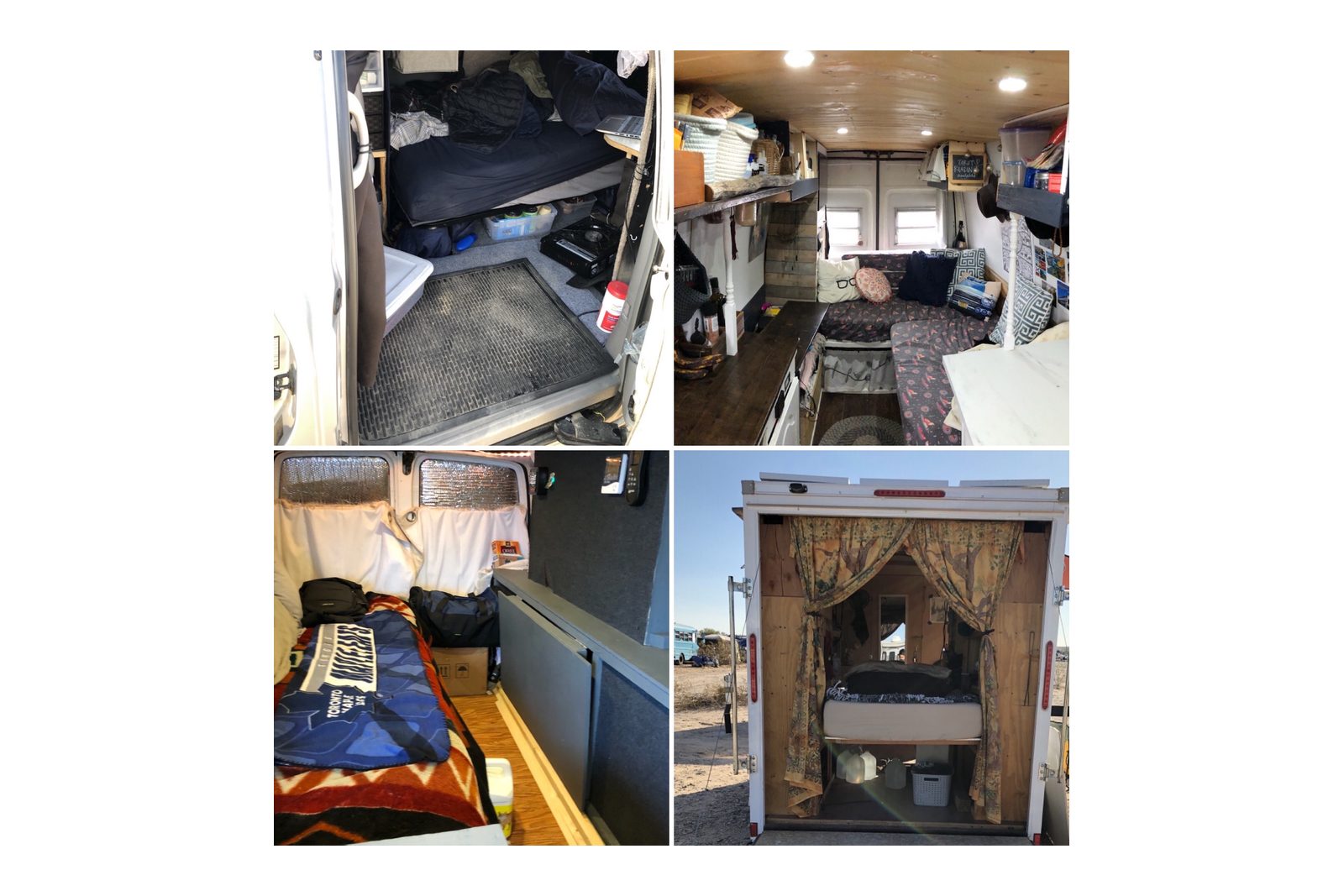
The #vanlife community, living and working full time in vehicles with technology built for houses. CHI 2021.
-
2024 · Theory
A phenomenological account of placemaking in small spaces. Graphics Interface 2024.
-
2025 · Artefact
Proteus, a programmable deck of cards, as the constructive answer. Thesis defended 2025.
- I went back to school after Amazon. The gap between how we designed products and how people actually lived with them had become the most interesting part of the job.
- The thesis, “Towards Design of Interaction Systems for Constrained Spaces”, follows technology into places it was never designed for and asks 3 things: what did the design assume, what does the setting do to that assumption, and what would a system built for the setting look like?
- Supervised by Mark Hancock. Funded by the Ontario Graduate Scholarship, QEII-GSST and the President’s Graduate Scholarship.
Papers from this work
- Small spaces, many places: a phenomenological analysis of technology-mediated placemaking in small spaces. Graphics Interface 2024.
- Provocations from #vanlife: investigating life and work in a community extensively using technology not designed for them. CHI 2021.