2020–2021 · Product designer and builder · Industry
SecureCheck-N
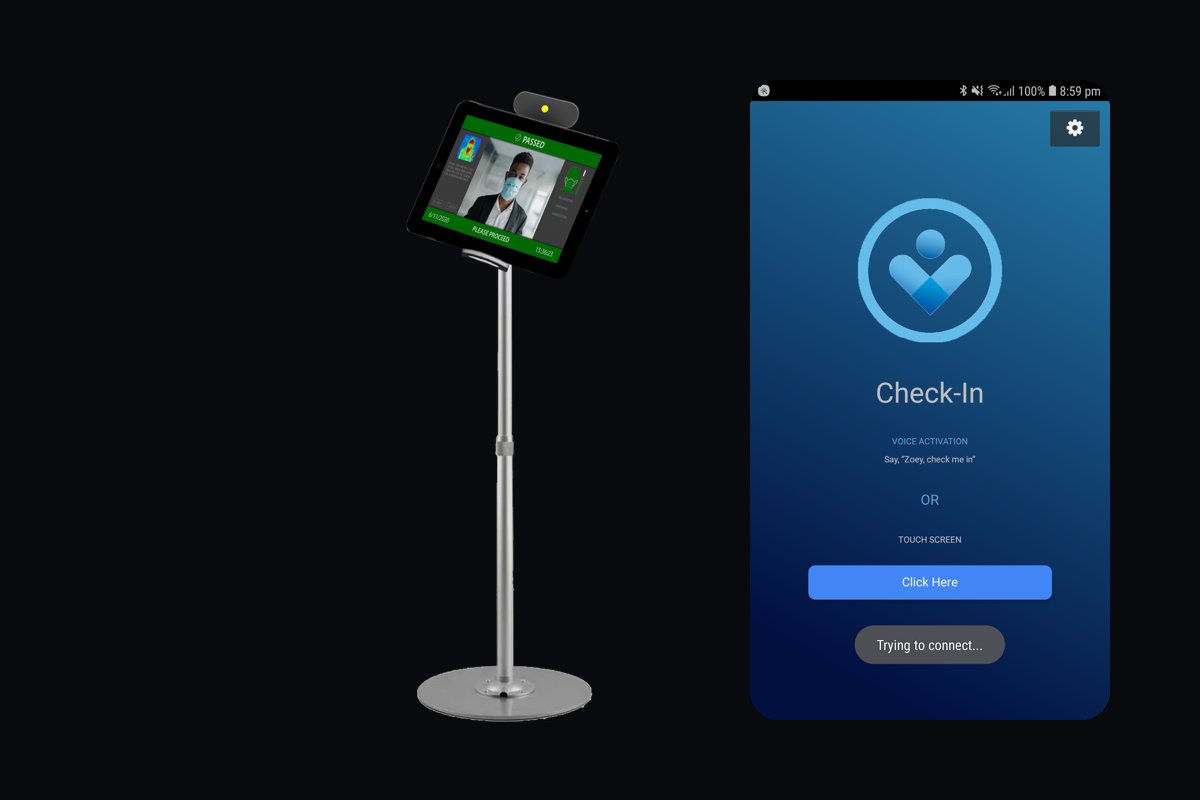
An infrared temperature-screening kiosk for the pandemic. A sensor on an adjustable stand, whatever tablet the facility already has as the screen, and a companion app that says pass or fail. Built for Secure Tech, LLC.
Outcome
A shipped kiosk and companion app, adopted by senior living chains and sold to restaurants, salons, offices, and small retail, with optional visitor tracking and a user guide for the front desk.
Path
-
2020 · Question
Facilities reopening in 2020 had to screen everyone at the door, without a nurse on hand and without waiting months for a purpose-built machine.
-
2020 · Artefact
SecureCheck-N: an infrared temperature sensor on an adjustable frame, connected over Bluetooth to any tablet or phone within six feet.
-
2020 · App
A companion app: green for pass, red for fail; an alert temperature the manager sets for their facility; check-in by touch or by voice.
-
2021 · Tracking
Optional visitor tracking with monthly email reports, so a facility could show who came through and when.
-
2021 · Guide
A user guide written for the person at the front desk, from assembling the stand to the three questions everyone asks.
-
2021 · Adoption
Adopted by senior living chains, where every visitor at the door is a risk to residents and screening has to run all day without a nurse.
- The constraint was the interesting part. Purpose-built screening machines were expensive and slow to ship in 2020, and every facility already owned a tablet. So the kiosk is a sensor and a frame, and the tablet is the computer.
- The app does the three things a receptionist actually needs. It shows pass or fail as a colour. It lets a manager change the alert temperature for their facility (37 °C by default). And it waits a set time between scans, so a queue at the door doesn’t get double-counted.
- Check-in works by touch or by voice (“Zoey, check me in”), because nobody at a door in a pandemic wants to touch a shared screen.
- Senior living chains were the adopters that mattered. Their residents are the people most at risk, the front desk is staffed by non-clinical people, and screening has to run all day without slowing visitors down.
- Visitor tracking was optional and opt-in, with reports emailed monthly to a registered address, and nothing collected unless a facility turned it on.
- It sits in the same line as the rest of my work: technology built for the room it will actually be used in, rather than the lab it was designed in.